Saturday, May 24, 2008

Shelby Supercars Ultimate Aero Twin Turbo

The Shelby Supercars Ultimate Aero Twin Turbo set the new World’s Fastest Production Car record with an average top speed of 255.83 mph.

On a temporarily-closed 2 lane public highway in Washington State, the SSC Ultimate Aero posted a top speed of 257.11 mph (413.83 kph) on its first pass and 254.55 mph (409.71 kph) on its return pass, achieving a new top speed record: a staggering 255.83 mph (411.76 kph).

SSC used a turbo V8 outputting 1183 HP and 1094 lbs. of torque. The use of lightweight carbon fiber materials allows for a low dry weight of 2750 lbs. giving the Aero TT the production record for lbs/hp ratio at 2.33.


The Ultimate Aero achieved 0-60 mph in 2.78 seconds and 1/4 Mile in 9.90 seconds at 144 mph.
The Aero TT is not completely stripped either, it features air conditioning, power windows, power mirrors, a navigation system, and a 10 speaker Audio/CD/DVD. Base price is expected to be around $585,000


SSC Ultimate Aero TT

Tuesday, July 10, 2007

The Lotus Carlton

The Lotus Carlton
Eats motorways for breakfast
0-60mph in 8.5 seconds, this is the time in which it takes most hot hatches. But not the beast I want to talk about in this week's Car of the Week - the Lotus Carlton goes from 0-60-0 in 8.5 seconds (without a parachute in sight). Built in a specially prepared unit that used to see service as the De Lorean development workshop, the Carlton arrived from Rüsselsheim as a virtually standard 3000 GSi, and was then immediately stripped back to a bare shell. The seats were sent for re-trimming, the engine returned to Opel and the body modified to accept the new engine and gearbox. Other changes ensure that the huge tyres don't foul the standard wheel arches.

But the real story of Lotus Type 104 centres in the engine and chassis. The engines were built up from all new parts by a small team, with one engineer assigned to each engine, Aston Martin style. Using the 3.0-litre 24-valve GM V6 as a starting point, Lotus upped the capacity to 3.6 litres, stiffened the block, improved coolant and oil flow and added a new induction system and manifold.

There are new Mahle pistons, new connecting rods and a new crankshaft, the latter with a dozen counter weights for smoother running. A pair of liquid cooled Garrett T25 turbochargers (which also saw service in the Escort Cosworth) completing the package. The original design concept demanded 100bhp per litre. It's a figure Lotus actually bettered, the new engine producing 377bhp at 5200rpm. More impressive are the torque figures. At just 2000rpm there's some 300lb.ft on tap, rising to a peak of 419lb.ft at 4200rpm.

Translated into performance, that means 0-60mph takes 5.2secs and 0-100mph just 11.5secs, while 50-70mph in third takes an incredible 2.8secs according to Vauxhall, and of course that magical 8.5 second 0-60-0 dash. Given that one of the most dangerous things about overtaking is the length of time you spend on the wrong side of the road, the Lotus Carlton must be one of the safest cars around! Read Alex Boheimer's article in this week's All Torque for his views on this behaviour!

2007 Volvo S60

2007 Volvo S60
Firmer suspension delivers sportier handling.

2007 Volvo S60

Overview

The Volvo S60 combines excellent performance with outstanding safety features. It feels like a tight European sedan and does a good job of smoothing out rough roads. Its interior is handsome and the available leather has a high-quality look and feel.

The S60 fills the middle range in Volvo's lineup: It's larger than the compact S40, but not quite as large as the premium-luxury S80.

The high-performance S60 R features 300 horsepower and all manner of go-fast goodies.

For 2007, all S60 models benefit from a firmer, more performance-oriented suspension. Also for 2007, the sporty Volvo S60 T5 features the watch-dial instruments that were previously available only on the luxury-flagship S80 and high-performance S60 R.

Volvo has been a world leader in safety engineering since the mid-1950s and the S60 is stuffed with safety features and engineering.

Model Lineup

The 2007 Volvo S60 comes in four models: S60 2.5T ($30,885), S60 2.5T AWD ($32,735), S60 T5 ($32,735), and S60 R ($38,985).

The 2.5T comes with a low-pressure-turbocharged 2.5-liter inline-5 rated at 208 horsepower and 236 pound-feet of torque. A five-speed automatic transmission is standard, while a five-speed automatic with Geartronic is part of an option package.

Standard equipment for the 2.5T includes fabric upholstery, dual-zone electronic climate control, central power door locks with keyless entry, power windows, front and rear fog lights, power heated outside mirrors with memory, tinted windows, a pollen filter, cruise control, trip computer, leather gearshift knob, leather-wrapped tilt/telescoping steering wheel with illuminated cruise and audio controls, illuminated glovebox and vanity mirrors, power driver's seat with memory and lumbar support, spilt/folding rear seat, and 16-inch aluminum wheels with 215/55R16 tires. A 100-watt stereo with in-dash CD player is the standard audio system across the S60 lineup.

The 2.5T AWD adds all-wheel drive. For better traction in snow, the AWD model comes with narrower 205/55R16 tires, mounted on narrower rims (6.5-inch vs. 7.0). DTSC traction and stability control, which weren't even available last year, are now standard.

The T5 comes with a 2.4-liter engine that uses high-pressure turbocharging to produce 257 horsepower and 258 pound-feet of torque (at 2100-5000 rpm) for much quicker acceleration. A six-speed manual transmission is standard; a five-speed Geartronic automatic with Auto-Stick manual control is optional ($1,250). The T5 also gets a sports suspension, speed-sensitive power steering, and 17-by-7.5-inch alloy wheels with 235/45HR17 tires. Additional luxuries include a power front passenger seat, aluminum mesh interior trim, blue watch-dial instrumentation, a leather parking brake cover, an auto-dimming rearview mirror with a compass, and other interior upgrades.

The S60 R comes with a 2.5-liter high-pressure turbocharged five-cylinder with twin intercoolers and continuously variable valve timing; it boasts 300 horsepower, and 295 pound-feet of torque beginning at just 1950 rpm. The S60 R offers a choice of a close-ratio six-speed manual gearbox or an optional six-speed automatic with a manual mode ($1,250). The S60 R also features all-wheel drive, a uniquely tuned adaptive sport suspension, Brembo disc brakes with four-piston aluminum calipers, and 235/45ZR17 Pirelli P-Zero tires on 17-inch wheels. All conveniences from the T5 are standard on the S60 R, plus bi-xenon headlamps with washers and automatic level control, rear spoiler, a choice of aluminum or blue-stitched leather shift knob and steering wheel, multi-contoured power driver and passenger sport seats, blue-stitched leather parking brake handle, and either Black Navy or Gobi Sand soft leather upholstery.

Option packages include a Convenience Package ($955) with auto-dimming rearview mirror with compass, Homelink, rear park assist, grocery bag holder, and sunglasses holder. The Premium Package ($2,995) adds leather seats with power adjustment for the front passenger, genuine wood inlays for the dashboard, a power glass tilt-and-slide sunroof, and additional rear speakers. The Sport Package ($1,595) combines the Geartronic transmission with 17x7.5-inch alloy wheels, 235/45HR17 tires, sport seats, and a 235-watt stereo (HU-850) with 6CD in-dash changer, Dolby Pro-Logic II, premium speakers and diversity antenna.

Convenience ($795) and Premium ($2,400) Packages are also available for the T5, but cost less because some of the content is already standard. For the same reason there is no Sport Package for the T5, but the HU-850 stereo is available as a stand-alone ($995).

The Premium Package for S60 R ($2,400) combines a power tilt/slide sunroof and the HU-850 stereo. Buy the stereo and you can add a subwoofer ($300). Also exclusive to the R-model are Atacama untreated natural leather seats ($1,550); rear park assist as a stand-alone ($400); and an integrated child booster seat ($300). T5 and R-model buyers can also opt for 235/40 Z-rated tires on 18-inch rims ($995). A Sport Body Package ($1,995), consisting of the usual side sill and air dam extensions, plus a new-for-'07 deck lid spoiler, is also available for T5 and the R-model.

Climate Packages for 2.5T, 2.5T AWD, and T5 include heated front seats, headlamp washers, and Rainsense automatic windshield wipers ($675); a similar package ($1,212) replaces the headlamp washers with active bi-xenon headlights. The S60 R Climate Package ($600) comprises heated front seats and rain-sensing windshield wipers.

Stand-alone options for all models include DVD navigation with Sirius Satellite Radio ($2,120); Satellite Radio ($95); Active Bi-Xenon headlights ($800); wood steering wheel ($325); Interior Air Quality System ($200); and metallic paint.

Safety and security features that come standard on all models include frontal, side-impact and side-curtain airbags; head restraints for all five passengers; seats that move on impact to reduce whiplash injuries; an immobilizer and alarm; anti-lock disc brakes (ABS) with electronic brake-force distribution (EBD); Dynamic Stability Traction Control; and a tire-pressure monitor. Seat belts with pyrotechnic pretensioners are provided for all seating positions along with ISO-FIX attachments for rearward-facing child safety seats. The S60 features the Safety Cage construction that made Volvos famous.


Walkaround

The Volvo S60 represents the essence of contemporary Scandinavian design. The S60 seems compact at first glance, and there's a hunched-shoulder look to the rear flanks, suggesting a hockey player ready to lead a charge up the ice. What you can't see is all the engineering designed to protect the people riding in the structure. It's there that Volvo's reputation for safety continues and deservedly so.

The S60 R is distinguished from the other models by a longer, smoother nose housing a smaller, lower grille; and a larger air dam with a bigger central scoop, flanked by serious-looking side grilles to feed the big turbo and twin intercoolers.

Active Bi-Xenon headlights are now available on all S60 models. A mini-processor gathers data to optimize their beam pattern, and the beams can be turned up to 15 degrees in either direction.

For 2007, new colors and new wheels are mostly what separate 2007 models from last year's models. Volvo claims that the front grille and bumper have been aerodynamically refined for '07, but you'd need the observational skills of Sherlock Holmes to see the difference. Nor will you likely spot the redesigned outside mirrors, although you might appreciate their new integrated-turn-signal feature. The mirror-mounted signals automatically flash three times with light pressure on the turn signal stalk. Unfortunately, the new mirrors eliminate the puddle lights that were previously standard on all S60s.

Interior Features

Overall, the interior of the Volvo S60 is handsome and comfortable. There's good interior space up front, and the optional pigskin leather has a high-quality look and feel. The seats themselves are cushy. They were redesigned for 2005 to provide better support and comfort on long trips.

The dashboard flows in a pleasant shape. Where available, attractive wood trim appears sparingly on the glovebox lid and on all four doors; while the sportier versions eschew wood for metallic trim.

New for 2007, aluminum inserts brighten the steering column stalks and steering-wheel-mounted switches. The quality of the material used to cover other surfaces is good. For 2007, a compass is built into the rearview mirror and the DSTC (stability and traction-control) shut-off has moved to the steering wheel stalk.

The standard gauges are attractive, with their flat-gray background, and easy to read. Switches are intuitive and easy to use.

For 2007, the T5 gets the watch dial instrument cluster introduced on the S80 and S60 R. The four blue-faced instruments are surrounded by grey rings with subtle blue hash marks. They feature clear, attractive gray numerals and thin red pointers on blue hubs.

Heating, ventilation and air conditioning controls are well designed and easy to operate, with big metaphoric controls to direct the airflow. Power-window buttons with auto-down are conveniently mounted on the door. Inside door handles are easy to grab.

The innovative radio controls take some familiarization to master. Changing preset channels involves turning a knob, rather than pressing a button, for example. Once understood, the system works well. The leather-wrapped steering wheel has controls for the audio system that makes operating it easier while driving.

The center console features a covered storage bin and cup holders that fit all standard sizes of beverage container. There's another mini cup holder on the center of the dash. The manual shift lever has a silver-colored plastic cover at its base that looks like silver-colored plastic.

The back seats require a duck of the head to get in. Once back there, the S60 offers good rear headroom, though taller adults find it short on legroom.

The trunk is roomy and deep and will hold a lot of small bags. However, Volvo had to make design concessions that constrict the trunk opening to carve the S60's swoopy shape, so loading big hard-sided cases might present a challenge. The rear seats are split 60/40 and fold down to carry long items. Fold down the right rear seat and front passenger seat, and you can carry something quite long.


Driving Impressions


2007 Volvo S60

The Volvo S60 offers an excellent ride, even over nasty bumps, and even with the optional 17-inch wheels. In the past, we've been disappointed by its handling, which was good enough but not up to the razor-edge standard of, say, a BMW. For 2007, however, Volvo tightened the base suspension, with firmer springs and shocks, front and rear; and thicker anti-roll bars supported by solid bushings. Roll stiffness is increased by 25 percent.

Front-wheel-drive models exhibit some torque steer, especially with the more powerful engines. Stand on the gas and you'll feel a tug on the steering wheel. It's really no big deal, though, and you get used to it. Still, the S60 definitely engages the driver, because you have to pay attention to the steering when you're driving hard. It's extremely stable at high speeds, however.

The T5 produces prodigious thrust from its high-pressure turbocharger. And Volvo's turbocharged engines get good gas mileage. The T5 rates 21/27 mpg with the six-speed manual transmission.

We found the brakes on the soft side. We didn't feel thrown forward in the seat under hard braking as we have with other sports sedans. But braking was stable and the ABS was very smooth.

The S60 AWD steering is slightly heavier than it is in the front-drive models because of the weight of the all-wheel-drive system. The AWD steering also has a more on-center feel (less play, in other words). The ride is firmer on the all-wheel-drive version, which has stiffer shocks to handle the increased weight. Overall, we think the AWD model's improved traction and handling in the rain and snow are worthwhile for anyone who annually faces those conditions.

We drove over gravel roads in the S60 AWD, and found directional stability on loose surfaces excellent. Power in the S60 AWD is distributed between the front and rear wheels using a wet multi-plate clutch controlled by electronics according to driving conditions. With a steady throttle on dry pavement, about 95 percent of the power is transmitted to the front wheels; but up to 70 percent can go to the rear wheels when required. The balance changes seamlessly and instantaneously. Of course other automakers say that, too, but the difference in Volvo's Active-On-Demand system is the degree of instantaneous-ness, particularly with the new Instant Traction system, which pre-charges the AWD system to provide instantly available torque. When one wheel slips, the balance of power shifts away from that wheel, thus replacing the slip with grip. As a result, it's more secure and better stuck to the road when the weather gets nasty. Acceleration is also improved in slippery conditions. The narrower tires on the AWD model improve stability and handling in the slippery stuff, as well. This makes the S60 AWD an excellent choice for driving on snow and ice.

The S60 R is another animal altogether. It was designed and developed by Hans Nilsson, who's been a Volvo engineer for 26 years and races his own Volvo in 24-hour endurance races. Volvo let him alone to do what he knows how to do, and he did such a bang-up job they now call him the Czar of R. We tested the S60 R on the road course at Las Vegas Motor Speedway, and it was a perfect day in a perfect car. The balance is brilliant, the engine train-like, the gearbox bulletproof and the brakes bomb-proof.

The R suspension is what's really special. Volvo says it's the most advanced active chassis on the market. A button on the dash allows three settings, Comfort, Sport, and Advanced, which mostly address the shock stiffness and engine management. There are distinct differences among them, and each performs exactly as defined by the buttons. No more compromises with the ride of your high-performance car: You have a suspension that's soft when you want it to be, and stiff when you need it to be. Up to 500 times a second, sensors measure things like longitudinal, lateral and vertical acceleration of the car relative to road conditions and driving actions, and use this information to constantly adjust the ride. But the real leap with this technology is that sensors from the suspension, wheels, throttle, steering and brakes all communicate with each other before the various instantaneous settings are determined, including stability and traction control.

Summary


2007 Volvo S60

The Volvo S60 rides well and handles well. It feels stable at high speeds. The all-wheel-drive model provides excellent driver control on slippery surfaces. The sportier T5 and S60 R offer strong acceleration performance. Volvo is renowned for safety engineering and the S60 is fully equipped with active and passive safety features including a rigid safety cage.


Model Line Overview

Model lineup:Volvo S60 2.5T ($30,885); 2.5T AWD ($32,735); T5 ($32,735); R ($38,985)
Engines:208-hp 2.5-liter dohc turbocharged and intercooled inline-5; 257-hp 2.4-liter dohc turbocharged and intercooled inline-5; 300-hp 2.5-liter dohc turbocharged and twin-intercooled inline-5
Transmissions:6-speed manual; 5-speed automatic; 5-speed Auto-Stick automatic; 6-speed Auto-Stick automatic
Safety equipment (standard):dual-stage front airbags, side-impact front seat airbags, side-curtain airbags, 3-point front seatbelts with adjustable anchors and pre-tensioners, front-seat Whiplash Protection System (WHIPS), rear seat ISOFIX child restraint anchors, ABS, electronic brake distribution (EBD), Dynamic Stability Traction Control (DSTC); tire pressure monitor, rear fog lights, five padded head restraints, rear-door child locks
Safety equipment (optional):all-wheel drive, rear park assist
Basic warranty:4 years/50,000 miles
Assembled in:Ghent, Belgium

Specifications As Tested

Model tested (MSRP):Volvo S60 2.5T AWD ($32,735)
Standard equipment:dual-zone electronic climate control with pollen/dust filter, central locking system with keyless entry, security system with battery back-up siren, front and rear fog light, power heated exterior mirrors with memory and integrated turn signals, power windows w/ front express up/down, tilt/telescope steering wheel with illuminated audio and cruise controls, trip computer, outside temperature gauge and digital clock, single-play CD stereo w/ six speakers, eight-way power driver's seat
Options as tested (MSRP):Premium Package ($2,995) includes leather seating surfaces, 8-way power adjustable passenger's seat with adjustable lumbar support, power tilt-and-slide glass moonroof, rear shelf speakers, wood dash inlays; Climate Package ($675) includes heated front seats, headlight wipers/washers, Rainsense wipers; Convenience Package ($955) includes auto-dimming rear-view mirror with compass, Homelink universal transmitter, grocery bag holder, rear parking assistance, sunglass holder
Destination charge:($695)
Gas guzzler tax:N/A
Price as tested (MSRP): $38,055
Layout:all-wheel drive
Engine:2.5-liter dohc turbocharged inline-5
Horsepower (hp @ rpm):208 @ 5000
Torque (lb.-ft. @ rpm):236 @ 1500-4500
Transmission:5-speed automatic
EPA fuel economy, city/hwy:18/25 mpg
Wheelbase:107.0 in.
Length/width/height:181.2/71.4/56.2 in.
Track, f/r:61.5/60.7 in.
Turning circle:38.7 ft.
Seating capacity:5
Head/hip/leg room, f:38.7/55.0/42.6 in.
Head/hip/leg room, m:N/A
Head/hip/leg room, r:37.9/54.6/33.3 in.
Cargo volume:13.9 cu. ft.
Payload:N/A
Towing capacity:3300 Lbs.
Suspension, f:independent, MacPherson struts, coil springs, anti-roll bar
Suspension, r:independent, multi-link, coil springs, anti-roll bar
Ground clearance:N/A
Curb weight:3651 lbs.
Tires:205/55R16
Brakes, f/r:disc/disc with ABS, EBD
Fuel capacity:18.0 gal.


Tuesday, February 13, 2007

How Much Car Insurance Do You Really Need?


Ah, car insurance - you can't stand paying for it every month; you can't get away with not having it. And really, it would be unwise (read: incredibly stupid) not to have insurance. Okay, we don't mean to be belligerent here; perhaps you have a perfectly valid reason for not having auto insurance coverage, although we personally can't think of any. But who are we to get all self-righteous on you? Let's focus instead on remedying the situation. If you're like many people, your first priority is to get the bare minimum requirements down. We'll start with that, and work from there. Most states require that you have liability insurance. This covers your arse when you're at fault in an accident. (Remember all those near misses in parking lots and while changing lanes on the freeway when you were blabbing on the cell phone, trying to change the CD, or pushing the slobbering dog/significant other out of your face? Well, your luck won't hold out forever, honey.) If you live in New Hampshire, South Carolina, Tennessee or Wisconsin, you aren't required by law (yet) to have liability coverage. For the rest of us, the mandatory coverage varies according to state. In the chart below, minimum liability limits are read as follows (in thousands of dollars): bodily injury liability for one person in an accident/bodily injury liability for all people injured in an accident/property damage liability for one accident. So, for Alabama, the minimum requirements are $20,000 of bodily injury liability for one person, $40,000 bodily injury liability for all people and $10,000 property damage liability. Personal Injury Protection (PIP), or Medical Payments (MedPay) in some states, pays for your own medical expenses, any lost wages and whatever other costs may arise when you're injured in an accident. It usually pays about 80 percent of your losses, and it also pays a death benefit. PIP is required in Colorado, Delaware, Florida, Hawaii, Kansas, Kentucky, Maryland, Massachusetts, Michigan, Minnesota, New Jersey, New York, North Dakota, Oregon and Utah. Some states also require you to purchase car insurance that will cover your own medical expenses, pain and suffering losses and, in some states, car damage in the event that the other motorist is at fault and is either uninsured or underinsured. See the chart below to find out if this applies to you.


Even though each state has minimum (or no) requirements for bodily injury liability, it is probably in your best interest to purchase higher limits. If someone else is injured and you're at fault, the minimum liability coverage may not cover their medical expenses, in which case their attorney will most likely come after your assets. It is generally recommended (by insurance companies - who else?) that you purchase 100/300 limits of bodily injury liability. On the other hand, if your personal assets don't amount to much (you don't own a home, struggle from paycheck to paycheck, violins are wailing), you don't have a whole lot for them to bother about, so the minimum requirements might actually suit you, not to mention save you some much-needed cash. Besides bodily injury liability, personal injury protection, property damage liability and uninsured/underinsured motorist coverage, you have collision and comprehensive auto insurance coverage to consider. Collision covers damage to the policyholder's car resulting from running into anything, be it another car, a fire hydrant, a light post, whatever. Comprehensive coverage takes care of your car in the case of theft, fire, falling objects, missiles, explosion, earthquake, flood, riot and civil commotion, among other things (like what? Alien invasion, we guess). Comprehensive and collision coverage are required on most lease contracts, and are essential if you own an expensive car. If you're driving an old POS, on the other hand, and the cost of the sum of your premium and your deductible nearly or in fact exceed the worth of your vehicle, you might want to consider doing without this coverage. Before you purchase any type of auto insurance coverage, be sure to study your other insurance policies so you don't end up paying for something you don't need. If you have a decent health insurance plan, you might get away with purchasing the bare minimum personal injury protection coverage, or none at all. However, you might end up paying a co-pay and deductible that wouldn't apply with PIP or MedPay. Uninsured or underinsured motorist coverage might also be a wise buy, even if you have full medical coverage, because they can pay for your pain and suffering damages. If you belong to an organization that offers roadside assistance, you don't need to purchase that through your insurer, natch. Same goes for mechanical breakdown insurance if you own a newly financed or leased vehicle which is still covered under warranty. Hey, we're all resentful about having to shell out a bunch of cash every month for something we may never need, but what're ya gonna do? The fact is that car insurance will most likely come to your rescue at some point, so it's imperative to purchase a worthwhile policy. Know what you must have and know what you should have and just pay the man, alright?

Sunday, February 11, 2007

2007 GMC Yukon XL 1500 Review


Introduction
The GMC Yukon XL is all new for 2007, and you can't find an SUV that works better as a tow vehicle. It has all the right stuff. The ride is better than ever, handling is steady and light. These are benefits of a new boxed frame for rigidity, a redesigned suspension, a new ring-and-pinion steering system, and other changes.
The driver sits way up high and feels like he or she is master or mistress of his or her domain. The optional leather seats are wonderfully comfortable for long distances. The pedals adjust for long or short legs. The instruments and gauges are finally stylish. There are new halogen headlamps that are bigger for improved visibility at night. Storage space is intelligently designed and all over, including a huge center console.


Those in the second row will find a lot of leg room. Bucket seats with a center console between them are available for the second row, turning them into first-class accommodations; and there is an optional power folding option, making it easier for third-row passengers to climb in. There's even decent legroom and good headroom in the third row, something few SUVs can claim.
The Yukon XL seats six to nine people, depending on the seating configuration. Essentially GMC's version of the Chevy Suburban, the Yukon XL stretches the already long wheelbase of the Yukon another 20 inches. There are many vehicles that seat seven people without taking up so much space to do it, but not quite so comfortably, nor with so much room left over for cargo.
Towing is the other area where the Yukon XL excels. It's a great vehicle for drivers who want an SUV that can tow cars, boats, horses, and travel trailers. A Yukon XL 1500 is rated to tow up to 8200 pounds, while the heavy-duty 2500 version can tow up to 9700 pounds.
The standard 5.3-liter V8 represents a new generation of engines, and it offers excellent horsepower and torque. An optional 6.0-liter V8 for the Yukon delivers more towing power.
And at the top of the line is the Yukon XL Denali. The Denali is almost a separate breed. It has its own engine, a 6.2-liter V8 based on the Corvette's 7.0-liter, making 380 horsepower and 417 pound-feet of torque. It also has its own transmission, a six-speed automatic with manual mode and its own all-wheel-drive system. The Denali comes standard with the AutoRide active electronic suspension, which is optional on the regular Yukon XL.
Deluxe options include a liftgate that raises and lowers under power, a DVD entertainment system, a Bose sound system, a navigation system, and a rearview monitor that improves safety and makes it easier to hook up trailers.


All-new, smoother and more refined.
Lineup

The 2007 GMC Yukon XL comes in basic SLE ($37,665) or SLT ($41,800) trim. It's available as a 1500 (half-ton), 2500 (three-quarter ton, with truck tires and a heavier suspension using leaf springs), and in two-wheel drive or four-wheel drive.
A choice of V8 engines is available, two of which are versions of the Vortec 5.3-liter V8, and which can run on E85 ethanol. The new generation 5.3 with an aluminum block, the engine in our test SLT, makes 310 horsepower and 335 pound-feet of torque. The more powerful optional engine ($1095) is an all-aluminum 6.0-liter V8 with variable valve timing, making 366 horsepower and 380 pound-feet of torque.
The Yukon XL Denali ($49,970) comes with a 6.2-liter V8 making 380 horsepower and 417 pound-feet of torque, a six-speed automatic with manual mode, all-wheel drive system, and the AutoRide active electronic suspension.
All other Yukon XLs use a four-speed automatic transmission, available in three strengths, depending on whether the XL is 2WD, 4WD, or 2500. They all have a Tow/Haul mode, which reduces upshifting and downshifting, and also shifts quicker, so the transmission doesn't work so hard when pulling a big load. Transmission oil temperature is part of the instrumentation (along with a tire pressure monitor).
The SLE comes standard equipment with cloth interior, six-way power driver's seat, 60/40 second row bench seat, two-passenger third row seat, three-zone climate control, AM/FM/6CD/MP3, rear seat audio and climate controls, power windows and locks with remote entry, cruise control, heated sideview mirrors, 17-inch aluminum wheels, roof rack rails, deep tinted glass, foglamps, and last but definitely not least, a tow package including heavy hitch, seven-pin wiring harness, two-inch receiver and electric brake control harness. Also standard is GM's OnStar system, which, among other things, notifies headquarters if there has been a crash, and someone calls the vehicle and sends help if necessary.
The SLT package ($4135) includes leather interior, 12-way power heated bucket seats in front, power adjustable pedals, remote starter, Bose sound system, XM satellite radio, garage door opener, power folding sideview mirrors, rear parking assist beeper, and roof rack crossbars.
Safety equipment on all models includes dual frontal airbags, four-wheel-disc anti-lock brakes with electronic proportioning, and StabiliTrak, GM's electronic stability program with anti-rollover mitigation and traction control. Full length airbag curtains are optional (standard with SLT), but front side airbags are not available, which is surprising, given the competition and price. The XL earned the maximum five stars in the government's head-on crash tests.
Options include a navigation system ($2145), rear-seat entertainment system ($1295), power sunroof ($995), second-row bucket seats ($490), power release for those seats ($425), power liftgate ($350), rearview camera monitor ($195), three-passenger third-row seat ($100), heated washer fluid system ($85), and 20-inch polished aluminum wheels ($1795).


All-new, smoother and more refined.
Walkaround
The 2007 GMC Yukon XL should not be confused with the Yukon. The XL stands for Extra Long. Though the same width, the Yukon XL is about 20 inches longer than the Yukon; it's the same length as its near twin, the Chevy Suburban, measuring 18 1/2 feet.
The Suburban and Yukon XL are among the most familiar vehicles on the road. They share styling although not the details. For example, the Yukon has a cleaner air intake below the bumper than the Suburban, a different shape to the headlights, and the grille is not split.
The 2007 redesign makes subtle but effective changes to the exterior, and GM has done an excellent job with the Yukon XL, making this huge vehicle look smooth, if not sleek. The contours are gently shaped. There's nothing in-your-face or edgy about it. Body-colored side moldings and door handles help a lot. Finally, they got rid of the chrome!
The running board is integrated and unobtrusive, extending no farther than necessary, with a black grippy coating. The tinted glass behind the C-pillar is expansive, and looks nice. The front end has been cleaned up, with beefy block-like headlamps over a front bumper fascia that has vastly tighter tolerances with the body. In fact, all the panels are a tighter fit. It's nice to see that GM can produce this kind of quality.
The windshield is more sloped than before, although the tailgate remains vertical. The rear window opens separately, which is convenient. Our SLT had the optional power liftgate, and we're not sure what we would have done without it. At least the liftgate is aluminum, which would reduce the grunting, if not the stretching way up to reach it. The split barn-style doors, handy when trailers are attached, are ancient history, no longer available.


All-new, smoother and more refined.
Interior
The Yukon XL is comfortable for long tows or major outings. It's a wonderful feeling to drive down the highway in one of these, sitting up high with all the comforts, including the optional Bose sound system.
Completely redesigned for the 2007 model year, the dashboard has been lowered by six inches, and the seats redesigned and raised, with a more convenient and secure seatbelt mounting on the B pillar. They are very comfortable, in leather.
We especially like the touch-screen radio/navigation system, much easier to operate than in so many cars, Mercedes, for example. We set the programs we liked, and could switch from favorite XM to AM to FM stations with one finger push; many vehicles require switching bands, then switching stations.
The switchgear is simple, and the instrumentation is clean. The console is huge (20.1 liters says GM, although we couldn't see 5.3 gallons being poured in there), with a deep storage box and a tray on top. The glovebox is 25 percent larger than the one in pre-2007 models. Two cupholders are provided in a removable tray forward of the console and they work very well. There's another cupholder in each door pocket. A slot in the dash just left of the turn signal is perfect for coins or toll-road tickets. The pedals are adjustable, to accommodate short wives and tall husbands or vice versa.
The rearview camera and monitor is quite useful, although it might take some new skills to fully use. One night we had to back up a narrow winding driveway squeezed by trees, and it could only be done by using the monitor. It was tricky. The backup lights did a great job of lighting the road for the camera; looking over our shoulder, our naked eye couldn't see the road nearly as well. Without this device, we would have been backing-up blind. It's also quite useful for spotting a child playing behind the truck after shifting into reverse or maybe a short, unseen pole. With a little practice, the camera makes parallel parking easier and quicker. It can also be used to help position the tow ball under a trailer hitch, reducing the number of times the driver has to jump out to check distance and alignment.
The Yukon XL can seat six, seven, eight or nine passengers, depending on the seats selected. Our SLT had the second-row bucket seats, with room for seven, in a two/two/three configuration.
The second row offers good legroom, at least with the two bucket seats: 39.4 inches, nearly as much as in the front. Second-row passengers have their own console, with an elbow tray and two cupholders each. They have their own audio controls too, and a front-row seat for the DVD screen that drops down from the headliner, and uses wireless headphones. The second-row bucket seats come with a console between them.
An optional power feature allows folding the second-row seats with the touch of a button on the instrument panel or C-pillar. It's slick: the seatbacks fold flat against the sitting part, and then the seats flip up against the back of the front seats.
The third row seats two or three, depending on the package. Split 60/40, the third-row seats fold and tumble, but don't fold flat into the floor like some competitors. The third-row seats flip up against the back of the second row. This fold-and-tumble feature sacrifices some quick cargo space because the seats don't fold flat, although there's still a lot compared to other SUVs. The third-row seats are also removable.
The third-row seats offer good head room and okay leg room (34.9 inches), and a great view through the wraparound glass, so it's not cramped or claustrophobic as it is in the GMC Envoy XL. But with the optional center seat, all you'll ever fit in the third row are three small kids. The kids on the end have their own cupholders. Their climate control vents are inconveniently located in the headliner over the necks of the second-row passengers, but they can be aimed rearward toward the third-row passengers' knees. The second-row passengers have their own vents in the headliner, over their laps.
Cargo space is where the Yukon XL excels. There's 137.4 cubic feet of storage behind the front seats, with the second row folded and third row removed. Even with all seats in place, there's still 45.8 cubic feet of cargo space behind the third row.
The lift-over height at the rear bumper is relatively high, so it's not easy to climb up into the cargo compartment to reach things, especially since there are no grab handles.


All-new, smoother and more refined.
Summary & Specs

The Yukon XL/Suburban has long been the tow vehicle of choice, and this redesign enables it to maintain its position on top. The latest version 5.3-liter Vortec V8 makes plenty of horsepower and torque for towing, and two more powerful engines are available. The suspension and brakes are considerably improved, the instrumentation is finally worthy, and it's hard to fault the SLT's leather interior, especially the comfort of the seating in all three rows. We do wonder why there are no available side-impact airbags in front, however.
Sam Moses filed this report to NewCarTestDrive.com from the Pacific Northwest's Columbia River Valley.

Tuesday, November 14, 2006

Bulging Bulgarian: I2B Wildcat


The Italian stallions face all sorts of competition, from Germany, England, even Japan, but Bulgaria? Eastern Europe doesn't produce many supercars, but a few guys – two Ivans and a Branimir – aim to change that. They form a design team called I2B and have penned two sportscar projects named Raven and Wildcat.
The Wildcat looks like some freakish morphing between a Mosler, a Lamborghini and an iguana. The car is strictly a concept, manifested in renderings and models, but the creators have some target figures in mind: curb weight of 2,600 lbs. propelled by a 460-horsepower V8. I2B plans to have a working prototype of the Wildcat ready for show in 2008 and are looking for customers and investors to help make the dream a reality.
More renderings after the jump


[Source: I2B via Leftlane News]

Ford tells bidders Aston will earn $109 million


In the week of the release of the most recent James Bond movie Casino Royale, there are reports that Ford sent information to potential buyers regarding the well being of Aston Martin. It stated that Aston is on track to sell 7,000 cars this year and will generate sales of £479m (US $912m) and a profit of £57m (US $109m). It also states that the Gaydon plant capacity could be expanded to 9,000 vehicles if necessary.
There are concerns within the company that the sale of Aston Martin could mean that vehicle production would move out of the UK, causing the loss of nearly 1,000 jobs. Could they really build an Aston Martin anywhere but the UK? If they do, they might have to deal with 007 himself.

1950 Buick Special


This 1950 Buick Special belongs to Jon and Ellen Crossmen of Chesterfield Township, Mich.

Chrysler star tackles trucks


Designer of popular 300 will now put his personal stamp on a revamped Dodge Ram.


Chrysler Group executive Ralph Gilles, one of the hottest designers in the auto industry, did so well on his last assignment -- heading the studio that produced the Chrysler 300, one of the most eye-catching sedans to come out of Detroit in decades -- that his bosses have rewarded him with what might be an even bigger challenge: reinventing pickup trucks and sport utility vehicles amid falling sales.
Gilles, Chrysler Group's new vice president of Jeep/Truck and Component Design, knows he faces a tough task. The pickup-truck segment had seen softening in recent months because of high gasoline prices, and sales have fallen by 10.4 percent through October, according to Autodata Corp. Some consumers who once considered a large pickup as a replacement for a conventional sedan appear to be having second thoughts, industry analysts say. Large SUVs have also taken a hit, while sales of midsize SUVs, the category that includes the Jeep Grand Cherokee, have been in free fall as consumers shift toward smaller SUVs and sedans.
At the same time, the competition is intensifying. General Motors Corp. has launched redesigned Chevrolet Silverado and GMC Sierra trucks. And a revamped Toyota Tundra -- Toyota Motor Corp.'s first serious attempt to compete in the full-size pickup-truck market in the U.S. -- will be introduced next year.
Auto analyst Kevin Tynan of Argus Research Co. says although pickup-truck buyers are the most loyal of any other segment, Asian automakers have proved in the past that they can take away market share from the domestic manufacturers. "I don't think the domestic manufacturers have faced the most intense competition yet," Tynan says. "It's going to get even more difficult."
Chrysler Group, a unit of DaimlerChrysler AG, is also under intense pressure to produce product hits as it tries to turn itself around from the $1.48 billion operating loss it reported for the third quarter and reduce an inventory glut, particularly in the SUV and pickup-truck segments. In October, sales for the Chrysler Group fell by 3 percent while domestic rivals made gains.


Launch of Ram crucial

The 36-year-old Gilles (pronounced jeels) admits he has never been a truck kind of guy. So he has been researching pickup trucks for one of the first places on which he will put his personal stamp: a revamped Dodge Ram. The launch of a new Ram is crucial for the Chrysler Group because the truck is the biggest selling model line for the company. Year-to-date sales through October have weakened by 11.8 percent, according to Autodata.
Last year, Gilles went down to Texas for three days to immerse himself in America's largest pickup-truck market, which included a night at Billy Bob's Texas in Fort Worth. At the self-described "world's largest honky tonk" where there are Willie Nelson concerts and live bull riding, Gilles hung out with Billy Bob's customers to talk to them about how they use their pickup trucks and how the vehicles could be improved.
"These were cowboys, but they were fashion-conscious. I left there feeling supercharged," says Gilles, a sports-car fanatic who used to spend his spare time racing a Dodge Viper before he switched to a Spec Neon.
A laid-back guy who watches "Desperate Housewives," Gilles occasionally swears during meetings and often jokes with colleagues. During a meeting to review a future SUV, he jokingly put his head on a colleague's shoulder who said he could meet one of Gilles's requests.
Mike Donoughe, vice president of Chrysler's body-on-frame product team, describes Gilles's style as one of relaxed intensity. "He's hyperkinetic," Donoughe says. "And what that translates to is he doesn't come across as stuffy, so that opens up channels of communication that otherwise might be closed."

Gilles a role model

Because of his quick ascent at Chrysler, Gilles, a Canadian native of Haitian descent, has become a role model for aspiring car designers and for young Haitians. He has been asked to be head of the Haitian Day parade in Miami and gave a high-school commencement speech earlier this year.
Though only 36, Gilles considers himself an old-timer at Chrysler with 14 years at the automaker.
His latest project, the Dodge Ram, now stands out in the segment with a big-fendered, blocky front end.
For the future Ram, Gilles says he is focusing on giving the truck a more aerodynamic design, which will improve fuel economy and will be tested in Chrysler's $37.5 million wind tunnel. (He says the design team spent three months working on the side-view mirrors on the Chrysler 300 to maximize aerodynamics.)
The trend in trucks and SUVs in recent years has been to make them look tougher, bolder and more aggressive with each redesign. But Gilles says you can only take that so far before it becomes cartoonish.
The future Dodge Ram will still look bold and aggressive. But Gilles also notes that pickup trucks, like cars, are becoming more like homes, with contractors needing space for files and room for a laptop computer. That means designers will spend a lot of time focusing on a refined interior with technological features, like an iPod adapter.
Gilles is also closely examining the letters and pictures he receives from truck owners. Impressed by shots of a souped-up 2002 Dodge Ram, he called the owner in Maryland and spent 20 minutes talking to him about what he did to the truck and why.
According to Gilles, the perfect design is one of timeless beauty and one that creates tension but doesn't scare a consumer away. "I've turned down designs that were too good, too pleasing," he says.
"I like designs that some people will love and some people will hate. It has to stimulate you one way or another."
His other big project is monitoring consumer reaction to the new Jeep Compass and Patriot SUVs. He says the small sport-utility vehicles will show where Chrysler can take the Jeep brand, which has long been known for its rugged vehicles like the Jeep Wrangler. Because of the struggling market for full- and midsize SUVs, the Jeep brand has seen sales drop by 3.9 percent through October, according to Autodata.


2010 Honda FCX


The FCX concept is Honda's latest take on fuel cells. Although its ultra-cab-forward body looks dramatically long, low, and wide, at 186 inches (15.5 feet) in overall length, the FCX is actually shorter than the Acura RL. It features a compact, Honda-developed fuel-cell stack in the middle of the car with two hydrogen tanks in the rear. The stack is actually much smaller than is now technologically feasible, but Honda says that it shows "our dream."
The novel four-wheel-drive system has one front 80-kW electric motor with two in-wheel, 25-kw motors at the rear.
The deluxe cabin is outfitted with a mix of traditional Japanese materials--such as a wood floor--plus the latest gizmos. The dashboard rises up (toward the driver) as speed rises, supposedly to hold the driver's attention, which leads us to wonder if the steering wheel is right in front of your nose once you reach triple digits.

2007 Volkswagen GTI Four-door


The original Volkswagen Rabbit was an excellent small car. Unfortunately, VW soon began to Americanize it, thinking we wanted more luxury features. We didn't. It was already the best in its class, and the embellishments watered down all its German-engineered appeal. If there was anything else we wanted from the nerdy Rabbit, it was her hot little sister, the Rabbit GTI.
Someone in Wolfsburg must have been listening, because the GTI blasted onto U.S. shores in 1982, embarrassing sports cars with its giggle-inducing handling and brisk acceleration. It may have been based on an economy car, but you never would have known it from behind the wheel. The GTI had performance you'd never have expected from its tall, boxy shape; cargo capacity that belied its size; and an image that allowed it to rub shoulders with cars costing twice as much. The hugely successful GTI established VW's image in America as the manufacturer of affordable, fun-to-drive, sporty small cars.


The second-generation GTI further reinforced that image. The GTI reached its zenith in 1987 when the sixteen-valve model--featuring a screaming, 7200-rpm engine and an upgraded suspension--joined the lineup.
But then VW got confused, and the GTI lost its focus as a driver's car. Top-of-the-line third- and fourth-generation versions got a silky smooth VR6 engine that was an aural masterpiece, but the engine's heft made an already front-heavy car even more so. Throw in other out-of-place luxury features, and the once-athletic GTI became a lumbering, understeering heavyweight.
Not that you would have known it. Volkswagen's clever ad agencies continued to capitalize on the promise of the GTI, yelling Fahrvergnügen! and Drivers Wanted!, even when the cars didn't really live up to their legacy.


But now, nearly twenty-five years after the original GTI wooed us with its curves (or, rather, its penchant for taking them at high speeds), the new, fifth-generation GTI is again a wolf in, um, Rabbit's clothing. There is no luxury pretense here--this hot econobox has cool plaid cloth seats, a couple of basic dials to adjust the climate control, and, most important, a chassis that loves to dance.
The terminal understeer that sucked all the Fahrvergnügen from the previous cars is gone, replaced with agile responses, quick turn-in, and lots of liftoff oversteer. You feel little body roll from the driver's seat, and, except for the occasional surprise bottoming-out, the GTI's suspension is tuned so well that you don't even notice it working.


VW engineers (including, presumably, the guy with the white coat in the TV ads) wanted to make sure you'd notice the GTI's throaty growl at low revs, so they added a tube to carry the sound from the engine's air intake tract into the passenger compartment. While you're listening to the sweet music from the direct-injection, sixteen-valve four-cylinder, you'll be pleasantly surprised how far you get thrown back into the supportive seat. With almost no lag, the 2.0-liter turbo makes tremendous torque from an ultralow 2500 rpm, and it pulls strongly all the way to its 6900-rpm fuel cutoff.
The controls work so harmoniously that you feel instantly comfortable driving the GTI hard. The shifter is so precise you never miss a shift. The electric power steering is well weighted and spot-on accurate, and the brake pedal gives progressive, reassuring feedback.
For 2007, VW is giving America even more GTI good stuff, in the form of a four-door body. Previous U.S.-market GTIs have had only two doors, but the four-door GTI gives maximum performance and maximum utility in a small package. The back seat is entirely livable, especially when you don't have to convince your friends to contort themselves over a folded front seat to get there. And, when the rear seats are folded, the four-door swallows piles of cargo that almost appear bigger than the car itself.
The two extra doors will cost you $500, and if you're particularly fond of your rear-seat buddies, you can protect them with side-impact air bags for an additional $350. The four-door weighs only 62 pounds more than the two-door, so you won't notice much difference in the way it drives.


This new, more versatile GTI represents a great value and comes standard with a six-speed manual transmission. For another $1075, you can get the dual-clutch DSG, which is the best manu-matic in the business. All 2007 GTIs gain a standard tire-pressure monitoring system, an auxiliary audio input in the glove box, and impact-optimized headrests for the standard seats. Further updates are expected mid-year, as are, unfortunately, some cost-cutting measures. The 2006 model's headlight washers will be phased out, and the soft-touch material used on the doors and the dash apparently was too expensive, because it's being replaced with harder, cheaper plastic.
None of those changes, however, interferes with bringing the GTI closer to its original mission--to be the most enjoyable jack-of-all-trades on the road. The four-door provides everything we want in an economical, fun, modern car but without making us feel like we've sacrificed anything at all. The GTI really is back.

Acura Introduces Two New Vehicles: The 2007 Turbo RDX and High Performance MDX


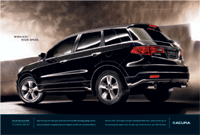
Building on its tremendous success in the increasingly hip crossover segment, Acura has introduced two premium vehicles that are sure to wow just about any driver looking for comfort, driving performance and quality fuel economy.
There’s an all-new RDX entry premium and the second generation of the popular MDX luxury vehicle. Both are combinations of family and passenger vehicles and are loaded with more innovations, creature comforts, styling notes and techno-engineering wizardry than there’s room to list on this page. So, here’s a quick not so sneak peek.
The RDX


Due to reach Acura’s 226 dealers early this fall, the RDX features the luxury brand’s first turbocharged and inter-cooled engine as well as an all new, all-wheel drive called SH-AWD (Super Handling-All Wheel Drive) first found on the RL luxury sedan.
Think of it as a you-know-what on legal steroids because this
SUV packs the performance of a sports sedan thanks to a power packed engine, a 2.3 liter 16-valve, inline-four that generates 250 hp. A 5-speed automatic transmission with F1®-style steering wheel mounted paddle shifters can function as a conventional automatic. They’re fun to use too.
Styling cues to look out for are the big muscular wheel arches with short overhangs, which add to a powerful look. On a quick drive route, it was easy to maneuver through crowded shopping center parking lots and major roads. The low hood line added visual impact and aided visibility too. The EPA estimated city/highway fuel economy for the RDX is 19/23 miles per gallon.
The vehicle is so fully equipped only one option package is offered for the auto-techno afflicted who need more gadgets than normal people. The MSRP for the base RDX is $32,995 and the techno version is set at $36,455.
The MDX


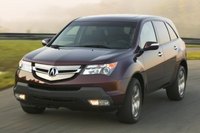
It may be called the MDX but the new 2007 version makes big improvements on what was a sensational passenger SUV. The 2007 MDX is longer, wider and lower than the previous generation MDX yet maintains the same weight through use of high-strength steel in combination with aluminum and magnesium.
Benchmarked against some of the best performance
SUVs in the world and tuned on the world famous Nürburgring race track in Germany, the completely redesigned 2007 MDX went through extensive testing at the famous track, seven times we were told, to get it right.
The MDX has Acura’s most powerful engine ever, a 3.7-liter V-6 engine with 300 horsepower that couples with SH-AWD. The MDX pushes the limits of performance while retaining the functionality currently enjoyed by the previous generation MDX. A 5-speed automatic transmission with Sequential SportShift is designed to satisfy the most performance-oriented drivers.
Longer, wider and lower than the previous generation, the 2007 MDX features distinctive exterior styling with aggressive fender flares and a bold Acura five-sided grille. The sleek exterior masks the third row seating capacity and ample cargo space.
The MDX interior features a driver oriented cockpit and a 4+3 seating concept which emphasizes the comfort, luxury and style of the front seats and the second-row positions.
Women, either as passengers or as drivers, will praise the oodles of creature-features which include, large storage spaces for cell phones, iPods, PDAs and laptops as well as a purse box (its too big for a glove box term) that’s big enough for almost any women’s handbag.
The 2007 Acura arrives in dealer showrooms on October 17. Pricing starts at $39,995 for the base model; with the tech package its $43,495; with tech and entertainment its $45,695; adding the sport package ramps it up to $45,595; and, the top of the MDX is the sport and entertainment package for $47,795. And there’s the $670 destination and handling charge.
Marketing and Sales
Prior to the walk-around to view the new MDX and RDX, engineers, not marketing types, delivered thoughtful, pertinent and relevant details about the consumer research that went into the creation of these vehicles. The walk-around and drive-about confirmed what we’d been told about the vehicles … without exaggeration, either. Facts are facts. No embellishment is needed.
Acura is planning on big results too. During the first full year, the luxury automaker predicts sales of 60,000 MDX units and 40,000 RDX units.
Bottom line – two exceptional vehicles. Acura dealers and their customers will be very, very happy.

Wagner's Own


Richard Wagner is a household name to the world’s operatic performers and audiophiles, alike. Among 19th Century composers, few can match Wagner’s musical genius, moral depravity, and royally bankrolled gravitas. And “gravitas” is especially apt terminology to describe the essence of the German maestro’s work.


Wagnerian operas play heavily upon the drama of live theater, (former German) nationalist sentiment, and are in layout the antithesis of brevity. Wagner’s (and the world’s) longest musical performance lasts for 18 hours (intermezzos included).

When we in the automotive sphere ascribe a car’s performance or character as “Wagnerian,” we transfer the character of the composer’s weighty classics – such as the opening prelude in Die Meistersinger von Nürnberg - grandly forceful music that’s meant to wage an audiovisual “shock & awe” campaign. And rguably, there is no greater or more Wagnerian a German soundtrack than that emitted from big-bloc V-8 and V-12 Mercedes-Benz engines.

Over the years, the press has used the adjective when describing many of Stuttgart’s finest– especially those models which received higher tuning at AMG.


~ Examples of Mercedes-Benz Wagnerian performances ~

Last summer, your correspondent stood witness to 6.9 liters of 450SEL V-8 power summoning the descent of the Valkyries in one enthusiast’s demonstration of the “fastest car he ever drove.” The gentleman’s every day car, a 2006 Nissan Maxima, slips past the old S-Class’ 7 ‘n change 0-60 time by more than a second - but he was adamant. “It’s scary.”


Another enthusiast – a BMW M5 driver – wished his near-as-makes-no-difference 400 horsepower super sedan elicited more audible bite. “It’s too quiet,” griped he. And Robert Farago, the seasoned journalist behind The Truth About Cars, confirms that the latest V-10 M5 maintains the burbling subterfuge of the former model albeit with a more groveled accent.

Last month’s issue of CAR magazine pitted the new M5 against Benz’s own E63 AMG in France. The 506 horsepowered E-Class sedan vocalized with a “concomitant snarl” and provided an experience, “NASCAR-esque and wholly addictive." And of the many praises the British testers had for the winning M5, accolades for the V-10's vocals were pointedly absent.

Finally, to support historical accounts with the insight of recent experience – your correspondent was three lanes and a hundred yards away when a rather impetuous driver decided to drop the hammer in his own C32 AMG.


The braying roar that sounded from the little saloon’s V-8 belied the car’s compact profile in creating a hugely imposing presence all those car lengths away. The sound echoed into my own tranquil cabin and clearly startled neighboring drivers. I changed lanes to allow Tristan to meet Isolde.

In an era where car manufacturers are seen and heard loosening their belts and standards in every measurable way, it is genuinely reassuring (and rewarding) to know that the force of mighty tuners such as AMG keep the magic of automotive acoustics alive. For what is the thrill of the drive without the fury of the power's own sound? Indeed, for these reasons the audiophile/ performance enthusiast/Teutonic patron’s best choice is Mercedes-Benz. After all, it’s Wagner’s own.


Monday, November 13, 2006

SPY PHOTOS: 2008 Aston Martin V8 Vantage Convertible

Our spy photographers have captured these six shots of a new, topless version of the drop-dead-gorgeous Aston Martin V8 Vantage running hot laps (top up and top down) at the Nurburgring. The car, which will probably be called the V8 Vantage Volante, is mechanically equal to the coupe version, but a power-operated soft top turns this Aston's sex appeal up a notch or two. Inside sources tell us that the car will be officially announced at this December's Los Angeles auto show. No word on how many will leave the show floor and head straight for Hollywood.